Monday, January 19, 2015

Lots of ash for a future workbench


Continuing the recent theme of lumber aqcuisitions, here's one from a couple of years ago that I never posted. I forget how many board feet of ash I got, but I remember that I figured out it was about 400 Lbs.
Not a bad haul
shorter, wider boards will become legs
 I'm planning to build a Roubo-style bench once I finish some other projects. I was pretty impressed at the massive selection at Highland Hardwoods in Brentwood, NH (no affiliation). They didn't mind me picking through the pile for about an hour to find all the right widths. There were other choices in the running, but the emerald ash borer may have made my decision for me, as I ultimately could not resist this ash at less than $2 per board-foot and few flaws. Certainly a nice species for a workbench. 
The 7' lengths after arriving in my shop. Yeah, that looks like enough for a workbench top.

Saturday, January 17, 2015

Visiting the lumberyard is more fun with a friend

Today I took my friend Frank on an exploratory mission to figure out what type of wood we might want to build a rather odd portable bar. We ended up finding a nice purpleheart board 12" wide and 17' long at Anderson Mcquaid (no affiliation) in Cambridge, MA. I had no idea those kind of sizes were even available, but we found it reasonably affordable. I always like my trips to lumberyards enough to prolong them, but even more so with a friend along.

Scott: "We must look like a couple of yahoos right now."
Frank: "Scott, we're using this lumber to build a purple and yellow glow-in-the-dark bar-top to bring to [...]. We *are* yahoos."
OK, readers, I'm heading back down to the workshop. Don't forget to smile.

Monday, December 22, 2014

8' Toy chest

Here is a project from a while ago that I forgot to post. I teamed up with a friend to build this toy chest for his young son. The idea was to get toys off the floor with this giant, easy to build project. Some people wouldn't call this woodworking, and that's fine, but this is the style of  building that suits the purpose. It is going to take some abuse, and probably be relatively temporary. This will be easy to repair, disassemble, or hand down to someone else after the kid(s) age a bit.

Toy chest, mid build. The lid breaks into 3', 2', and 3' sections.

The chest is 8' long, the same length as full sized sheets of plywood, and the 2"x4" lumber we bought. The two 4'x8' sheets of plywood were cut down the middle lengthwise. Two 2"x4"x8' boards were screwed to each one, running down each side. These form the front and back .After that, we screwed the ends and bottoms in, using short lengths of 2x4's to complete the frame. All the plywood dimensions are in 1' increments, and the 2"x4"s are measured to fit in the spaces.

The only part of the project you could call "joinery". Fun to slap together, though.
We made a couple notches for cross-pieces across the top, which stiffen the frame and support the segmented lid. If I recall correctly, it only took a couple of hours to put it together. The sanding and painting took longer. I'm posting this at this time of year because I think something similar could make a good last minute gift for someone. Maybe a little kid, or maybe a parent with a mess on their hands.

If you build this, have some rope on hand.

P.S. A note on safety: Plywood chest lids can be a danger to small fingers and heads.If you build this project, you may want to look into hinges designed for this problem, or be extra watchful
 
This is a happy kid. Now He's a considerably larger happy kid. I really ought to have posted this a long time ago. 

Thursday, December 4, 2014

WIP

I haven't been posting here a lot lately, and I would like to talk about the other things I've been spending time on.

I have been working wood, but more to the point, I have been attempting to reduce work-in-progress. In other words, finishing what I start.
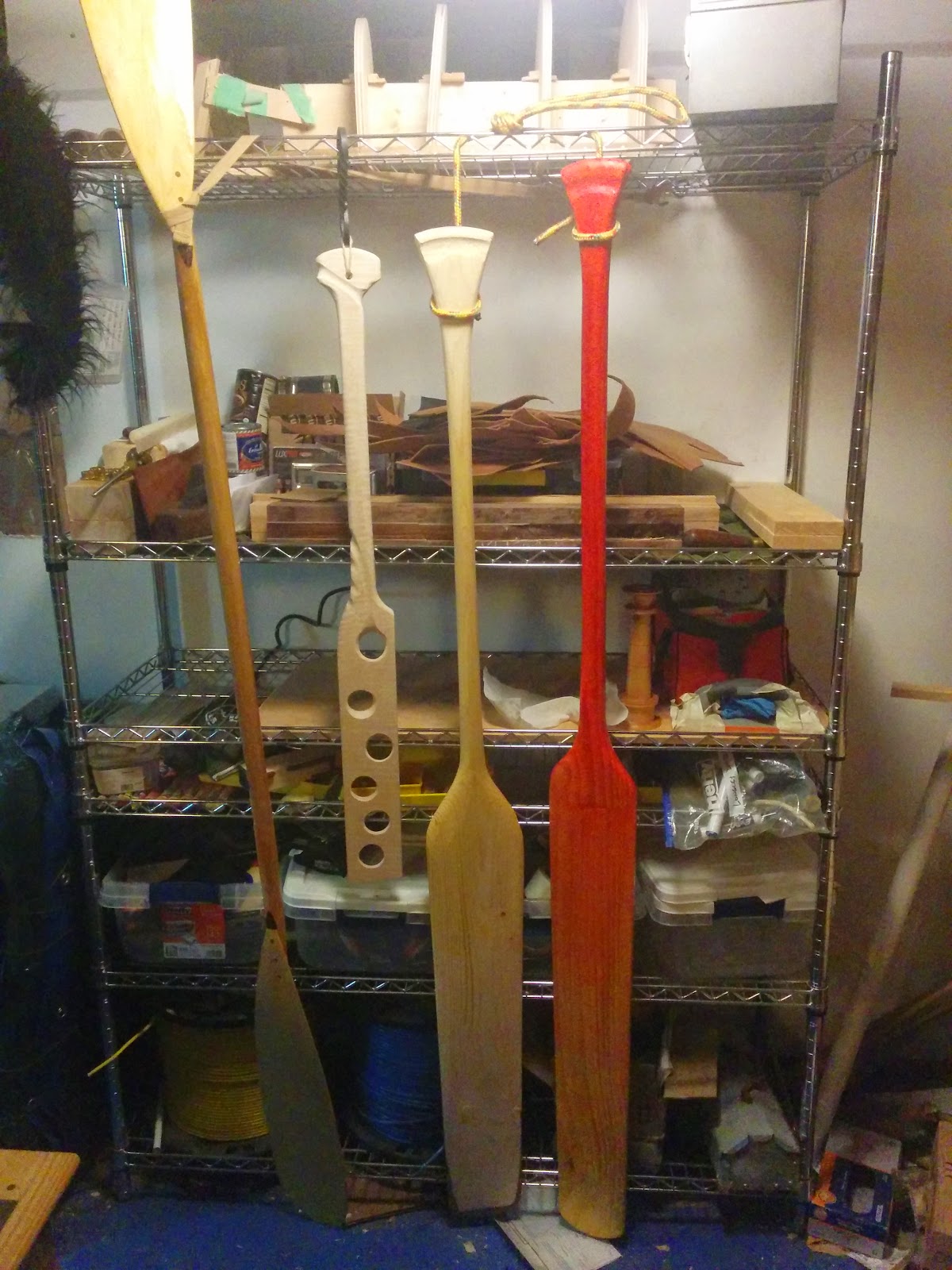
WIP storage in the woodshop. Right next to the lumber rack so I am reminded to finish some WIP instead of starting in on a fresh board. Apparently I have a knack for almost finishing paddles.

Managing a software kanban system at my job had made me very aware of the inefficiency that inevitably comes with doing too many things at once. I started to notice projects that I had left halfway done, both in the wood shop and out. After a while I decided to track my WIP (work-in-progress). I already use an electronic GTD process to manage tasks, so it wasn't much of a stretch to tag the tasks in progress, list additional WIP as I noticed it, and keep a count so I know how I am doing.

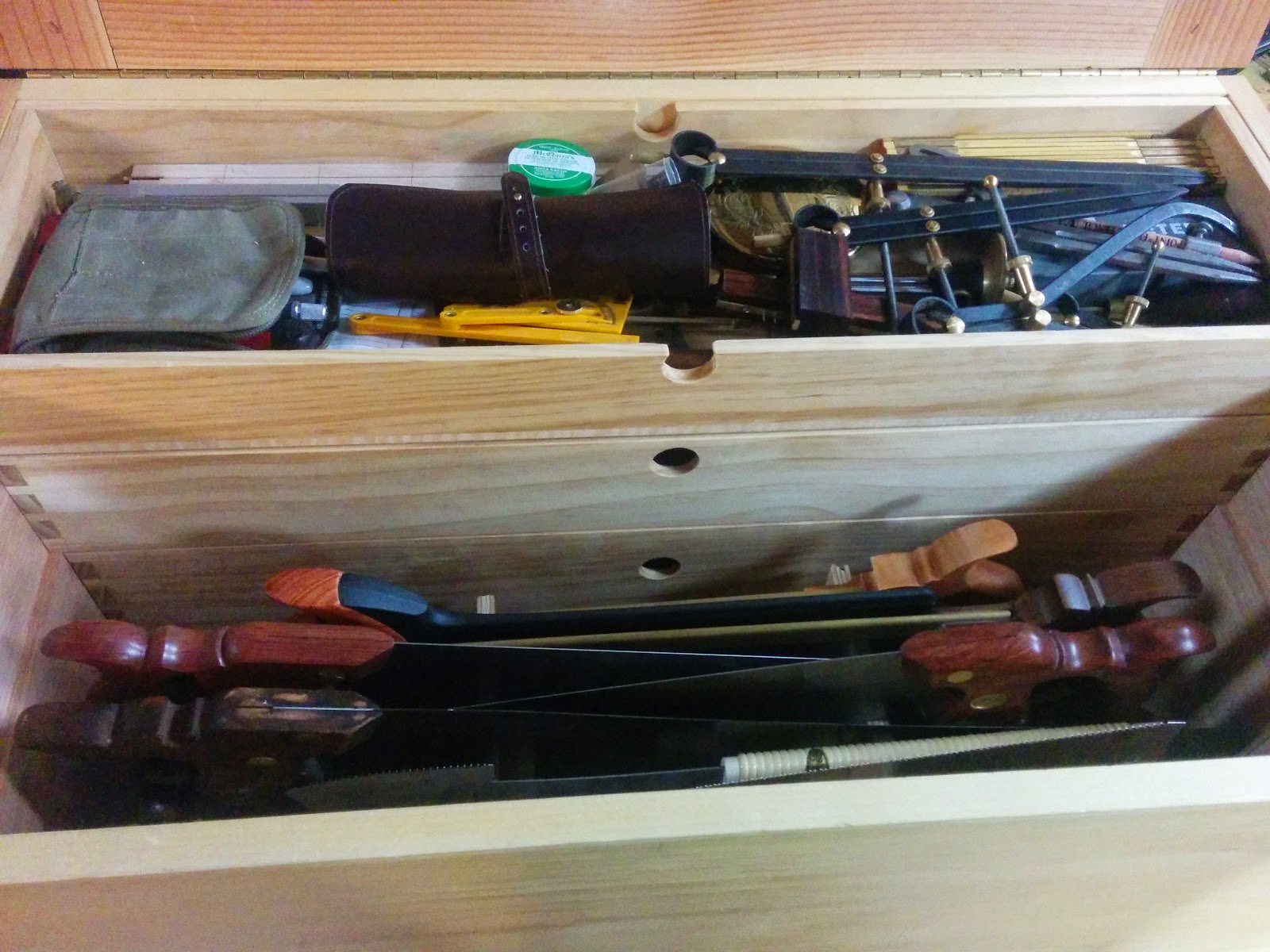
Within a couple of weeks of keeping track, I could see 50 WIP items, all things I've started and not finished. Since then, I've spent a few months finishing projects and resisting the urge to start new ones. Now I have 73 because of all the additional WIP I've noticed along the way. (I peaked at 80). These tasks are all different sizes, by the way. Anything from borrowing a DVD to installing an attic floor and joists qualifies. I will often break up a task into sub-tasks, but only if each task has value on its own. For example, I am working on a tool chest, but each internal rack and tray, and the lid, etc. , ate tracked separately. I used my tool chest for months before I had even bought the wood for the lid frame, but it was still useful in that form. Building the lidless box was good for WIP too. I didn't have extra wood in my way while I used those folks to finish other projects. However, getting a single tray or box 50% done cannot be a separate task,  because getting to that point on its own doesn't accomplish anything. 

So, now I am trying to finish more things than I start (for a while). 73 is too many things to have hanging over my head. Anyway, this should explain the blog inactivity. Writing is another thing to do. My WIP numbers are actually starting to go down now, but I am not done by any stretch.

My immediate goal is to get that number under 10. After that I might worry about trying to post individually about every interesting woodworking project or idea I encounter. In the mean time, I'll post when time allows, and try to summarize a lot.'

Below are some pictures of woodworking projects and tasks that I've finished in the last few months. I'm not sure If I will make time to post about them individually. I hope they inspire you to start, or better yet finish, your own woodworking project.
functional saw till prototype that fits in my tool chest

Sliding trays for tool chest

Here are the trays and saw tills resting on the rails together

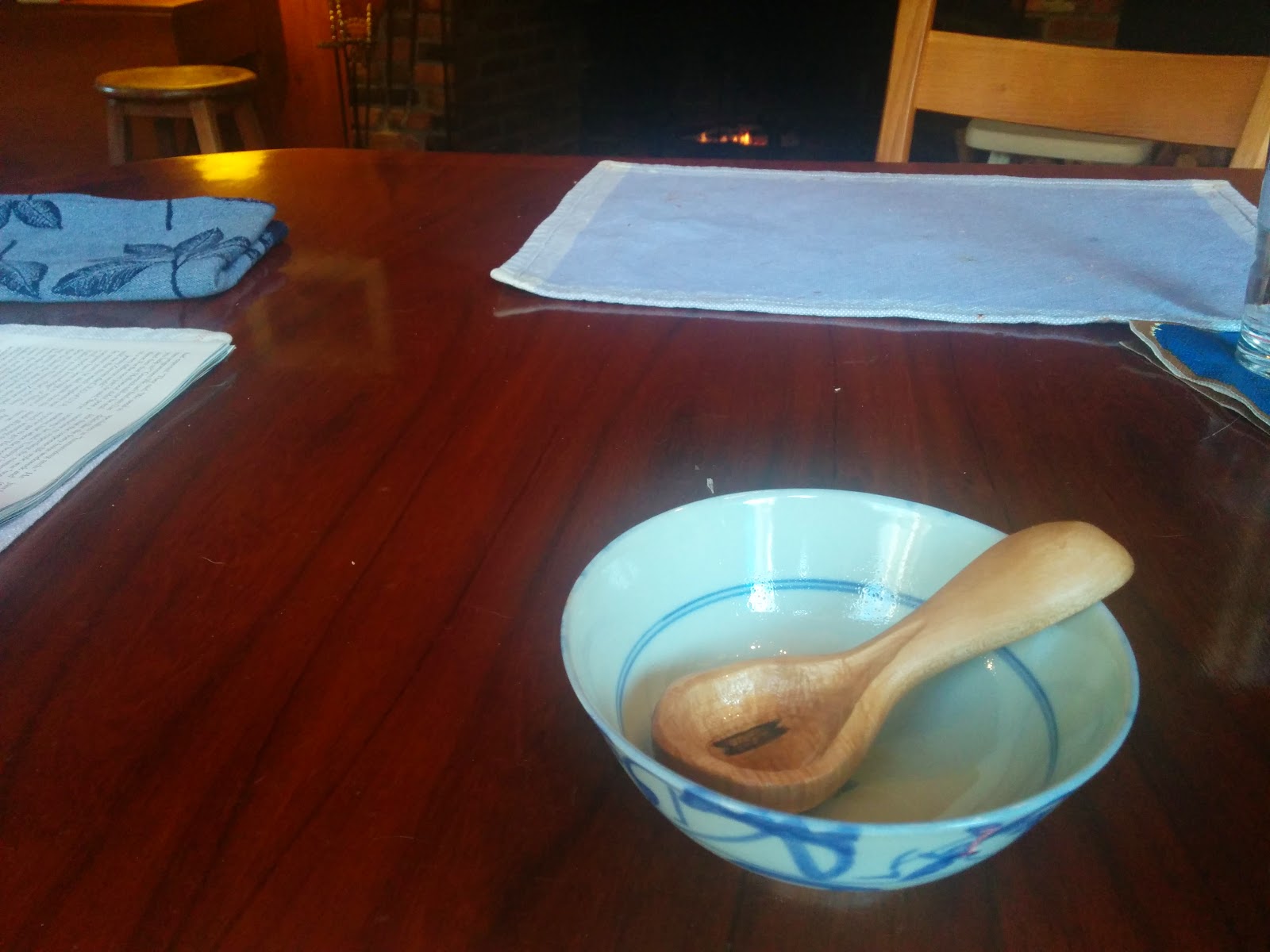
small maple spoon

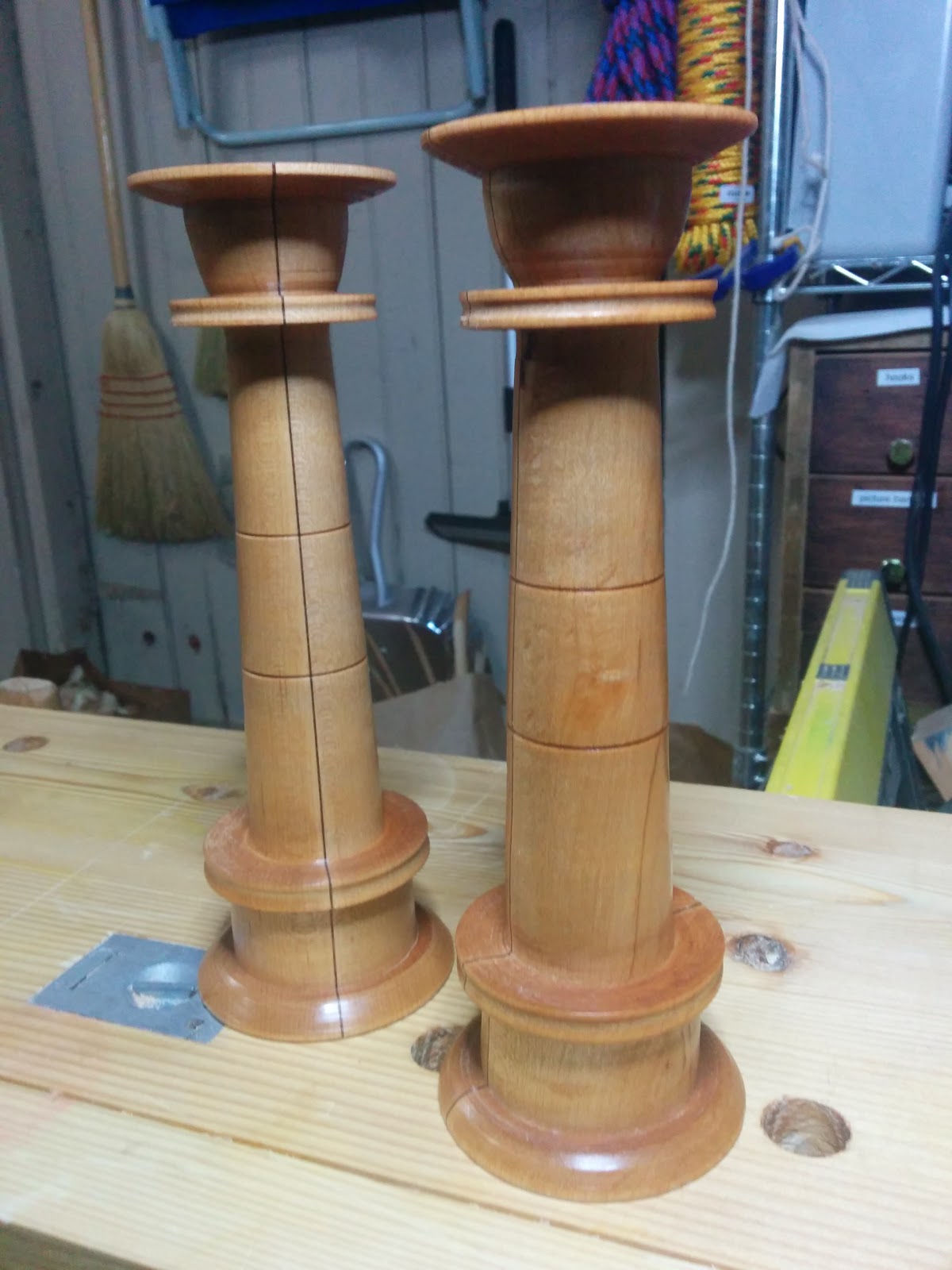
candlesticks, an education in turning

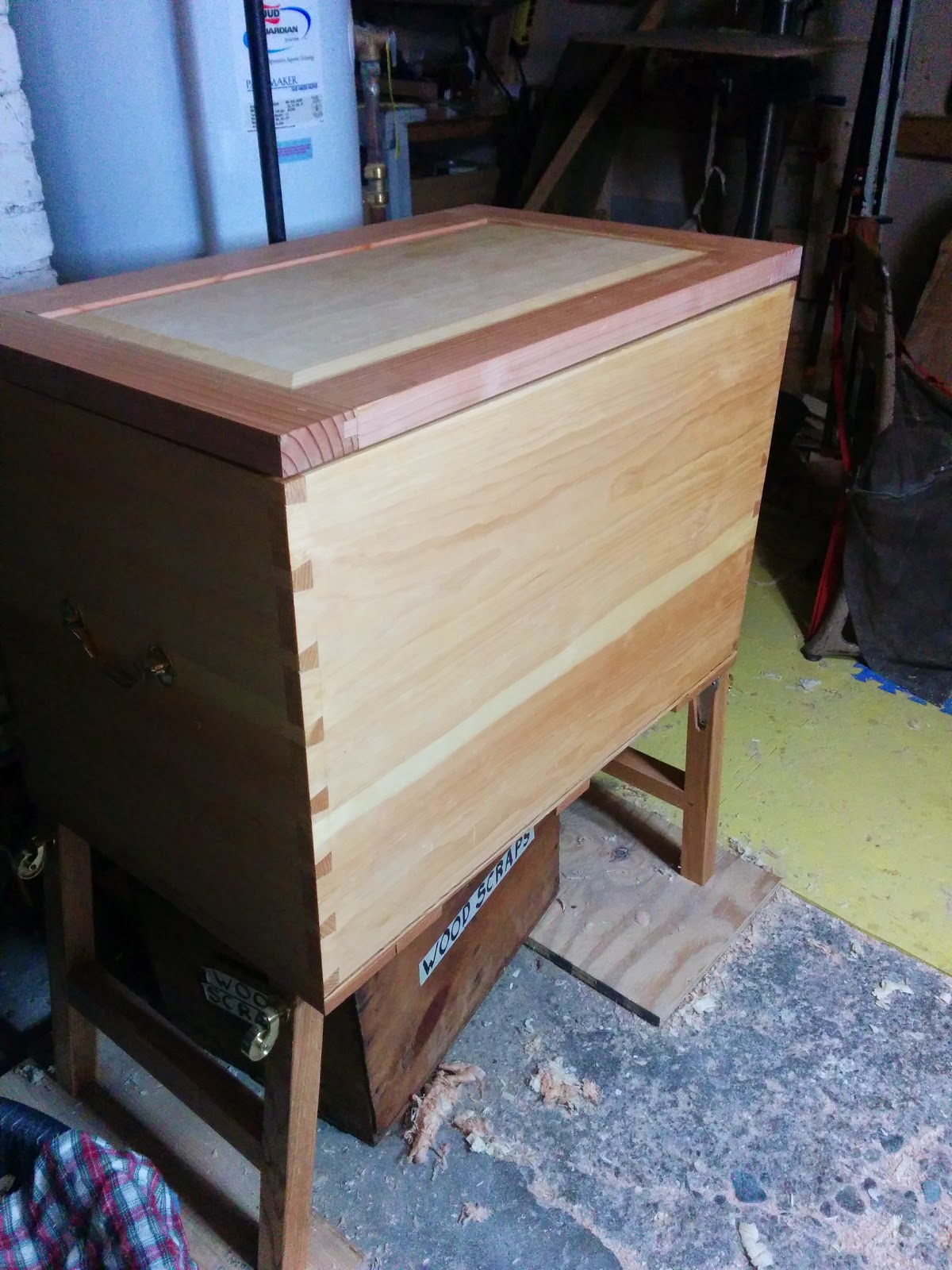
Tool chest carcase and a lid that closes


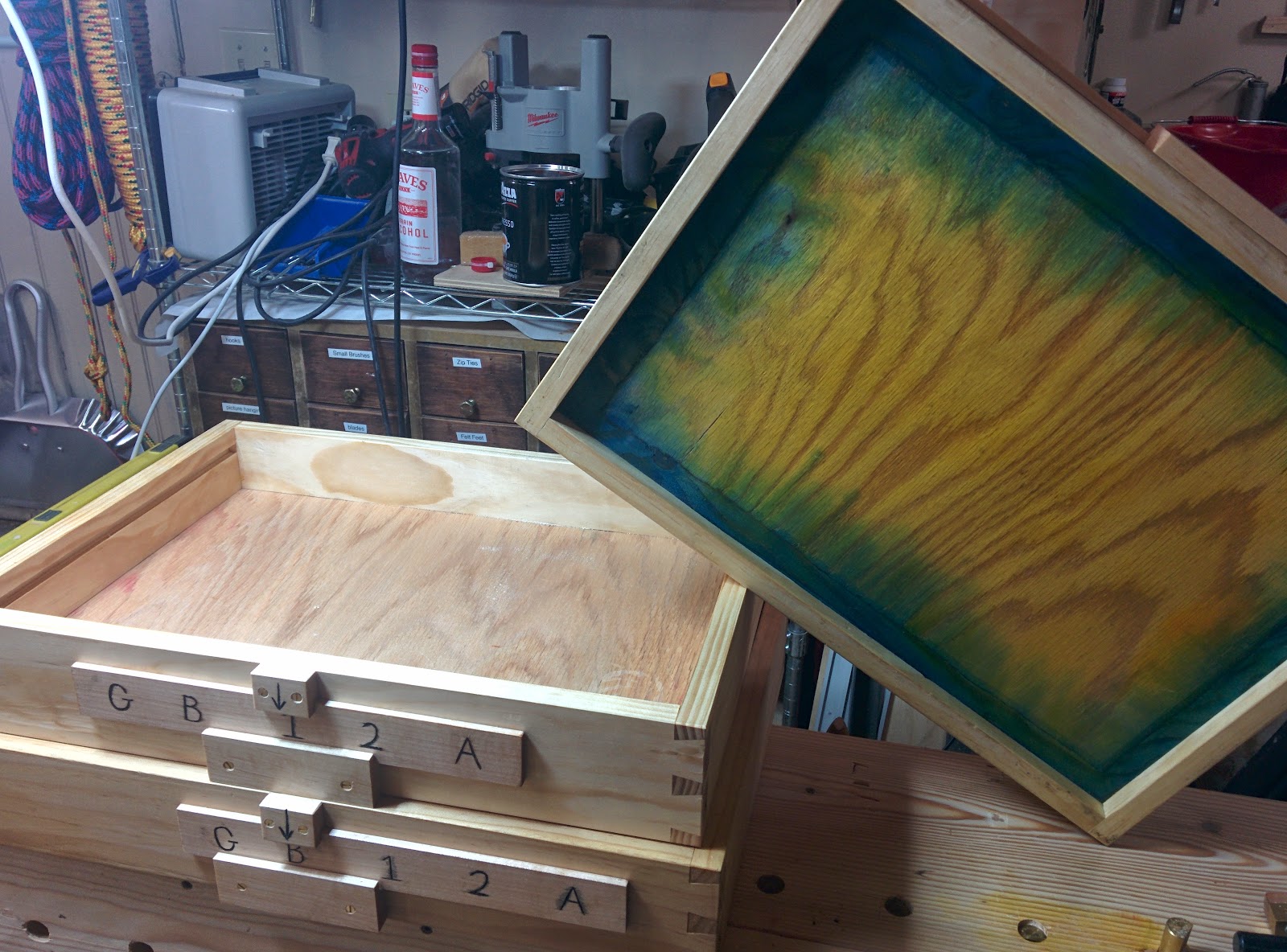
Trays for keeping organized while moving stuff around the house. I learned to cut dovetails (by hand) with this project, and had some fun with wood dye.

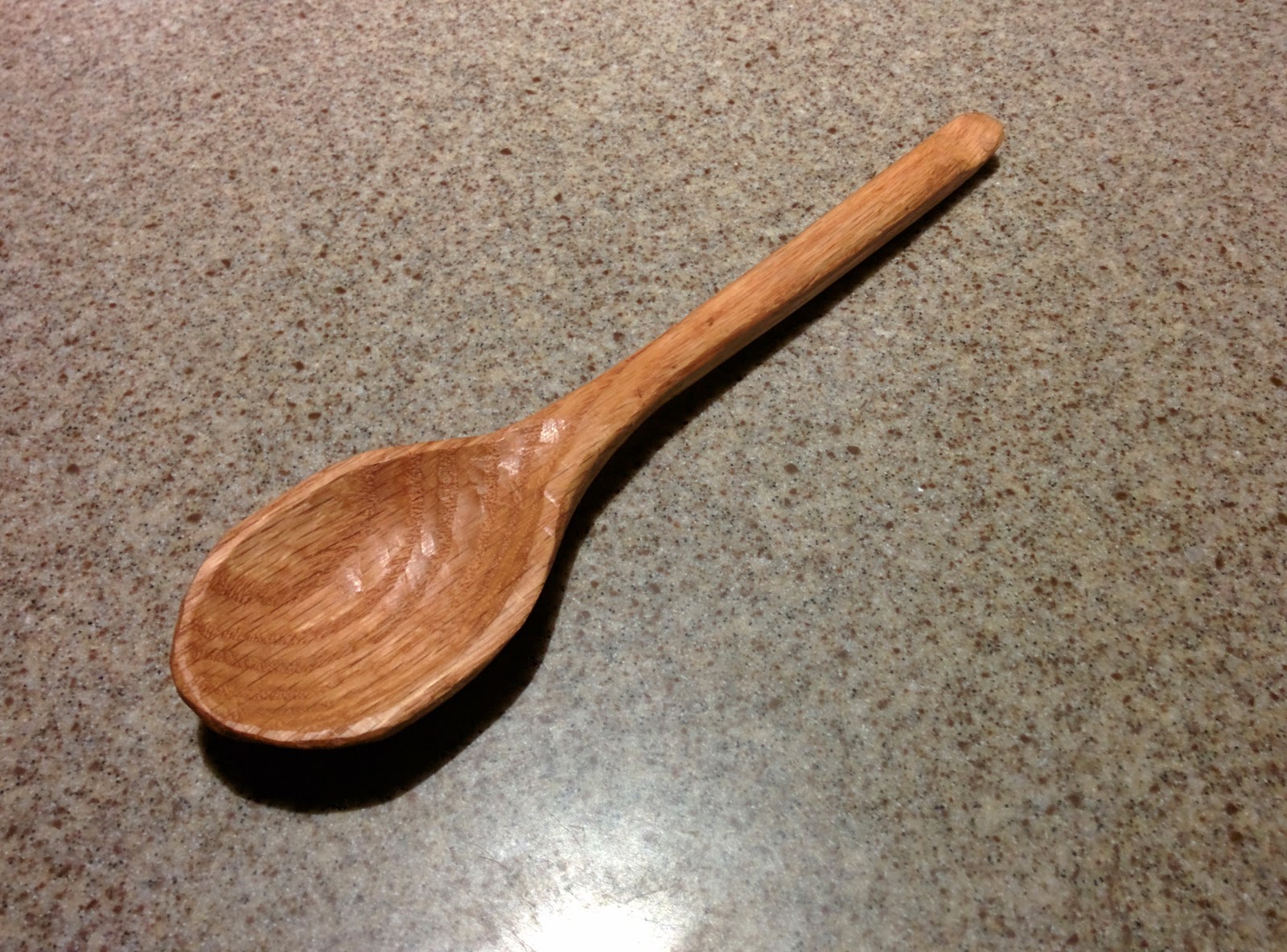
Oak spoon, finished. I think I started this when I was a kid 20+ years ago. I noticed it, put it on the WIP list, and then it was a matter of time before I finished it. Not hard now that I own a spokeshave and a gouge.

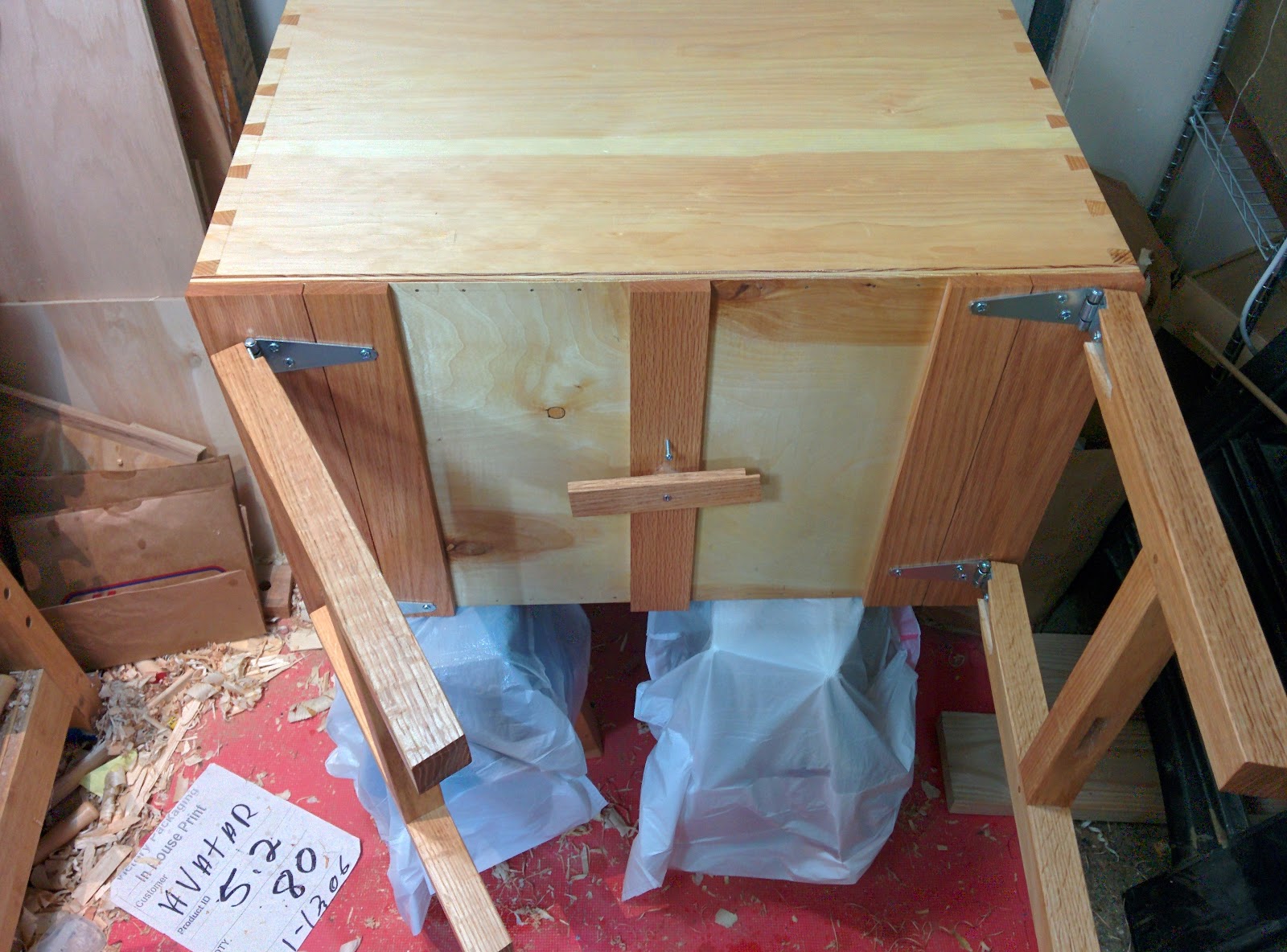
Folding legs for tool chest. These now have casters that deploy when the legs are folded.

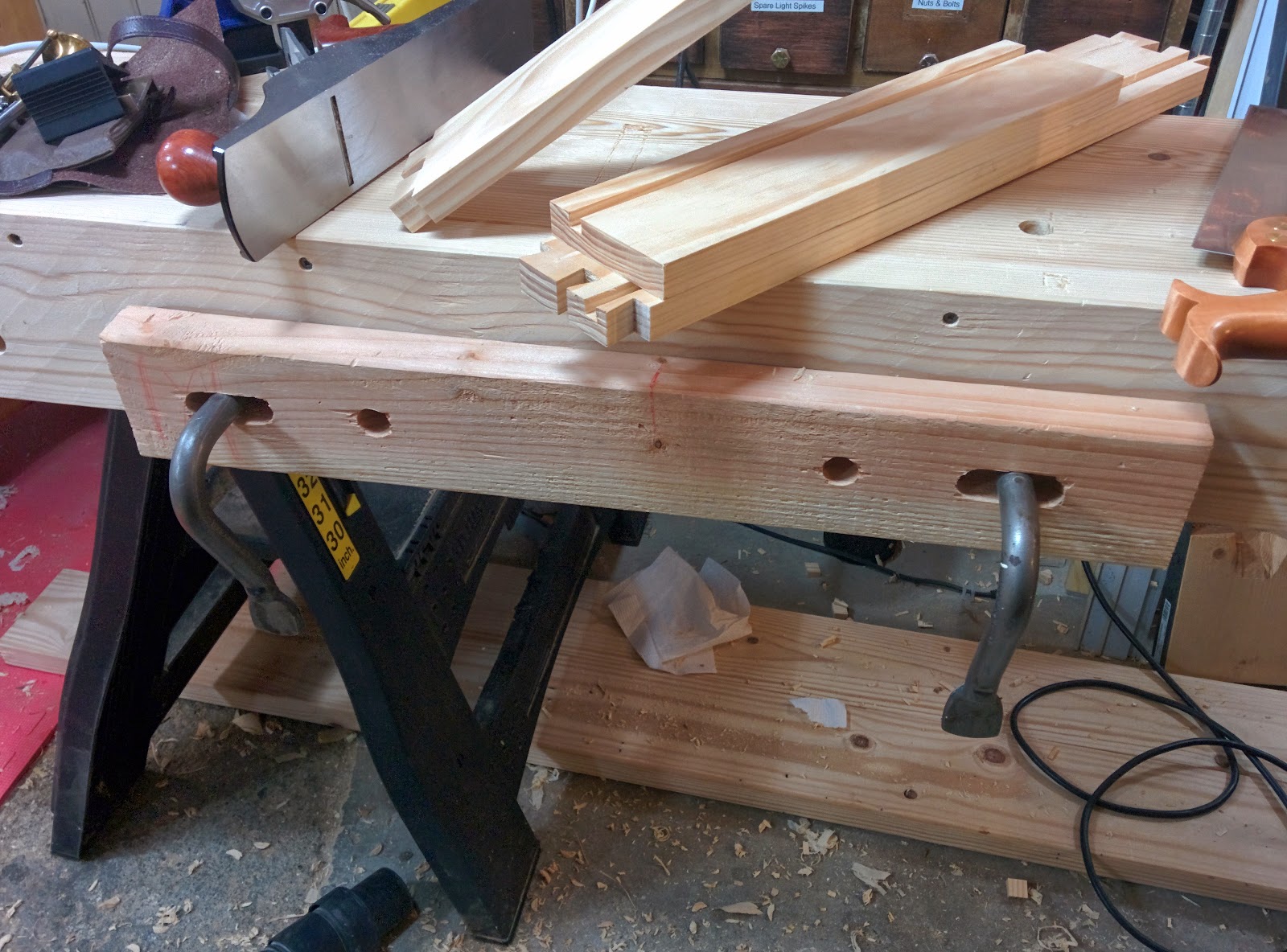
Temporary workbench with a thing that resembles a vise ("twin-holdfast-caul"?)

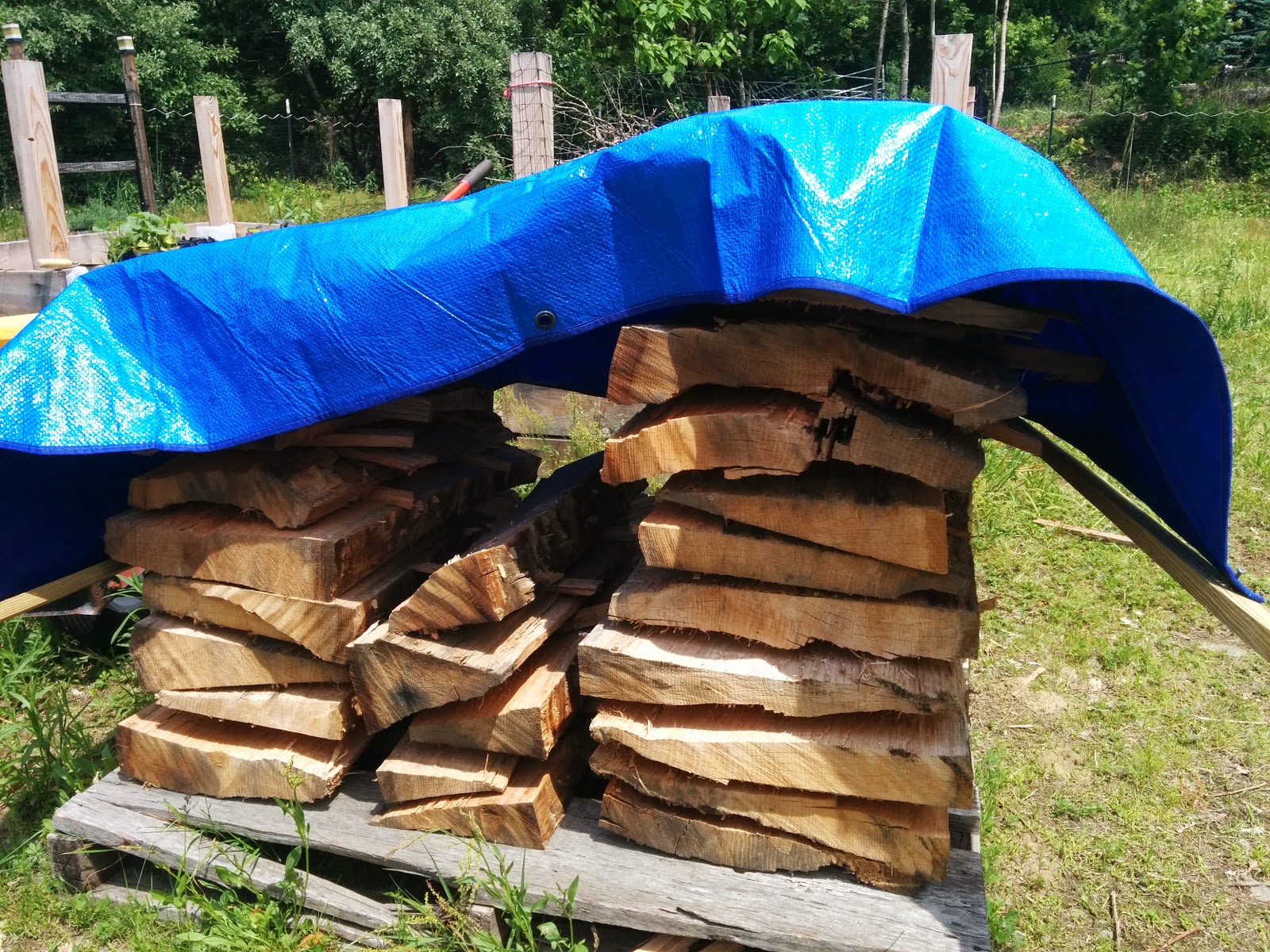
radially split oak log from my cousin's yard and stacked it to dry

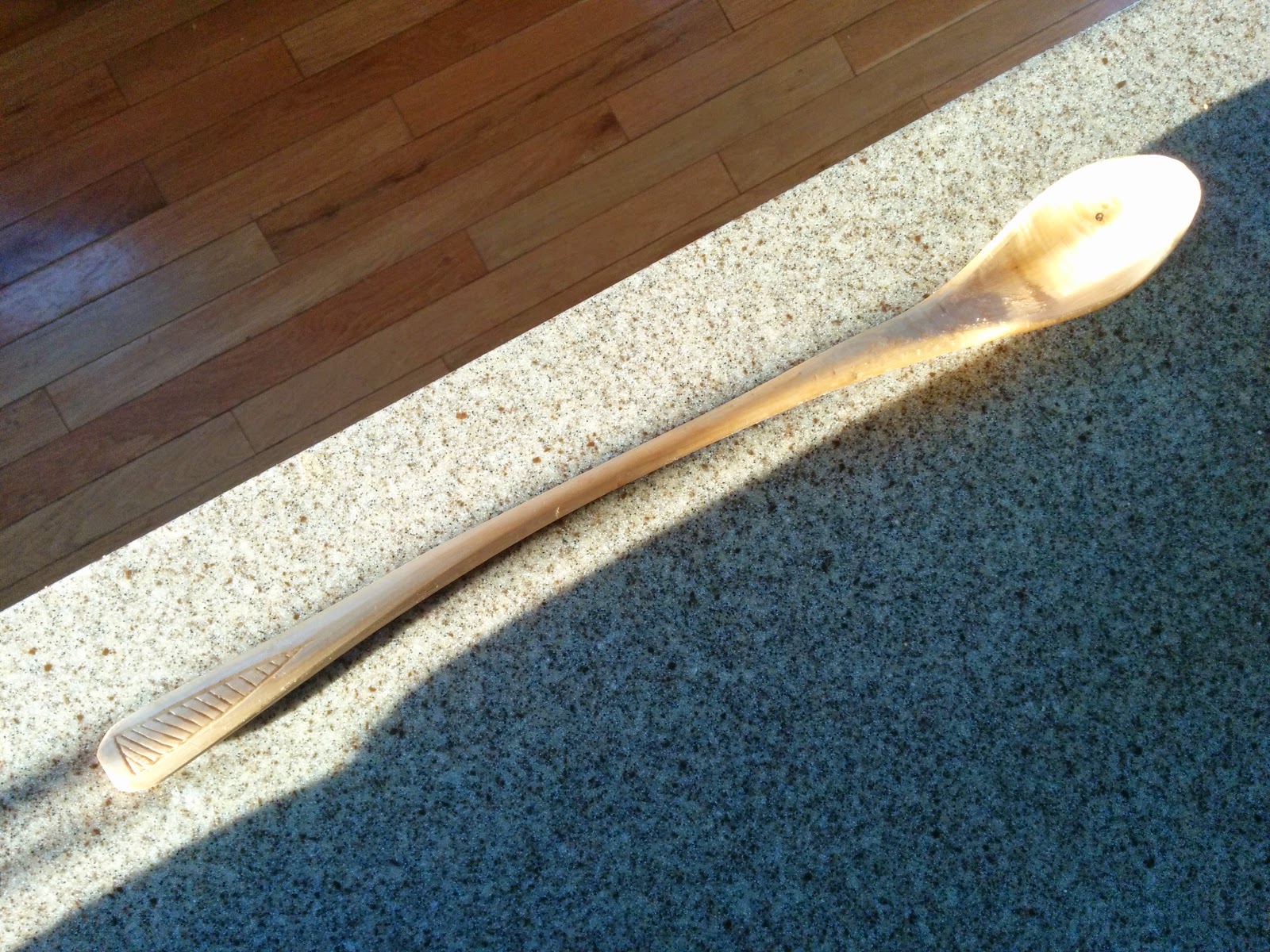
extra-long maple cooking spoon. I should never have started this, but at least it was quick to finish.

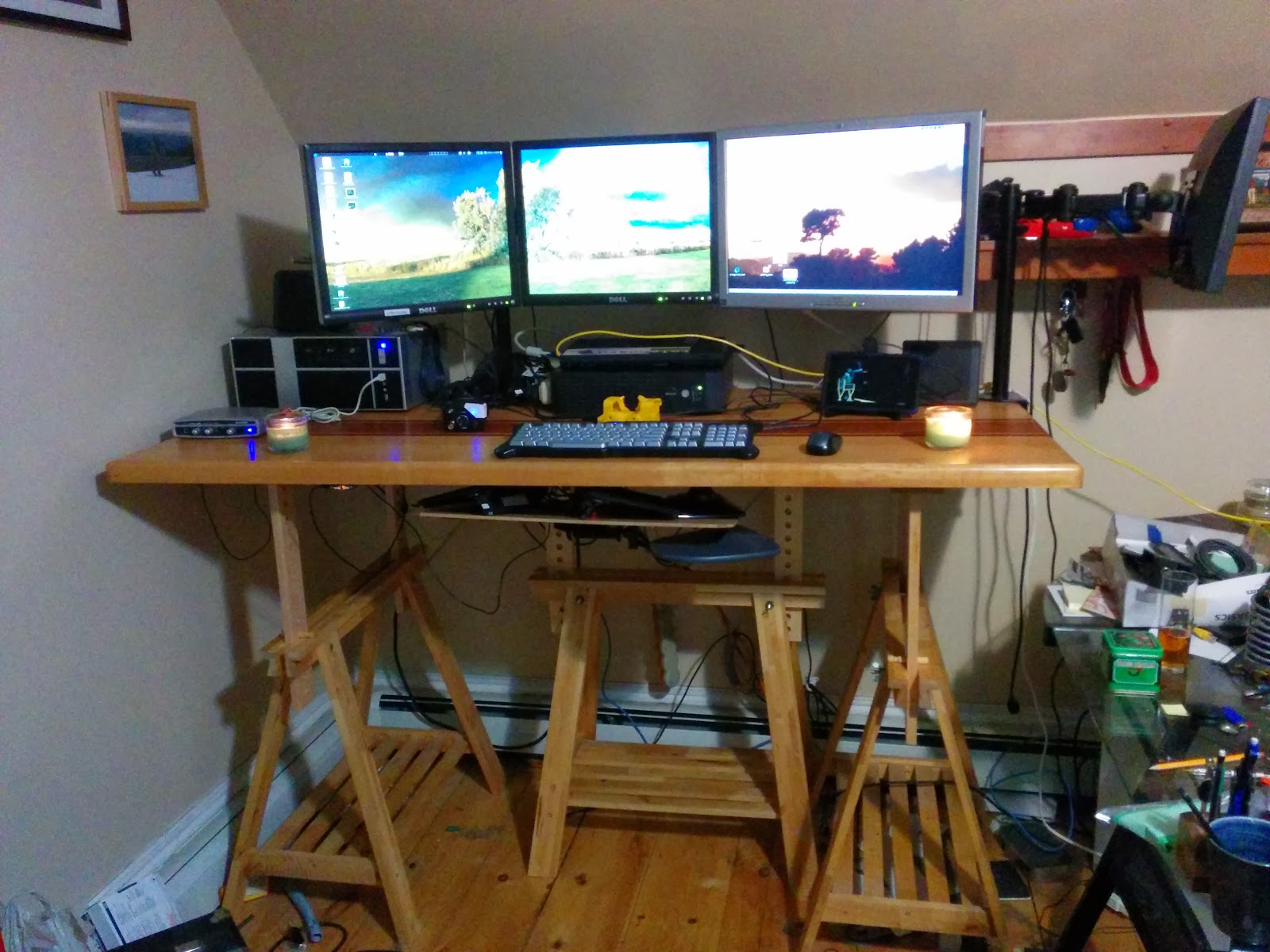
Raised desk to standing height. To do this, I made a custom part for the IKEA stantions so they could go taller. 

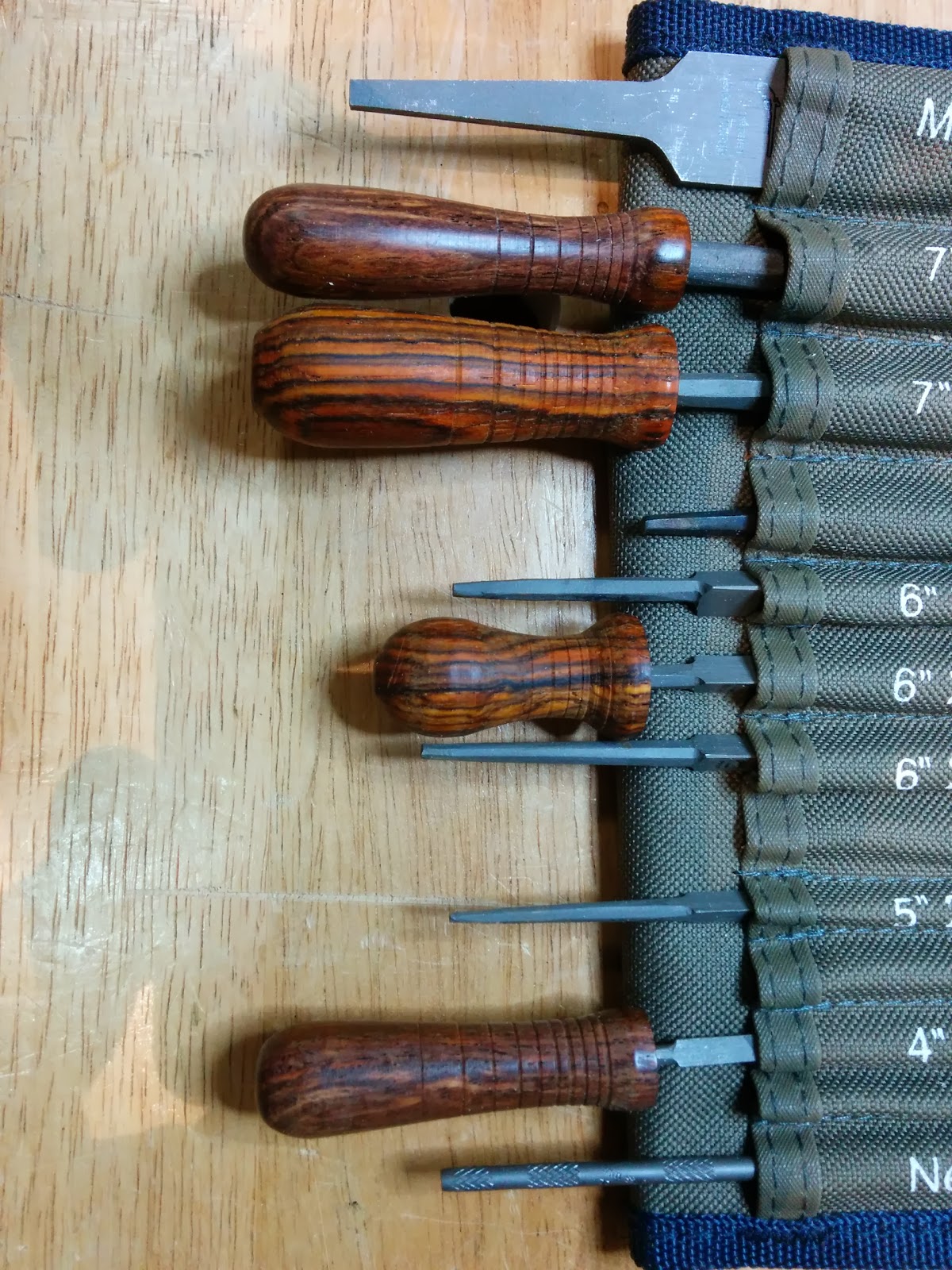
Cocobolo handles for saw files. In hindsight, it would have been easier to use corn cobs, but this was fun.

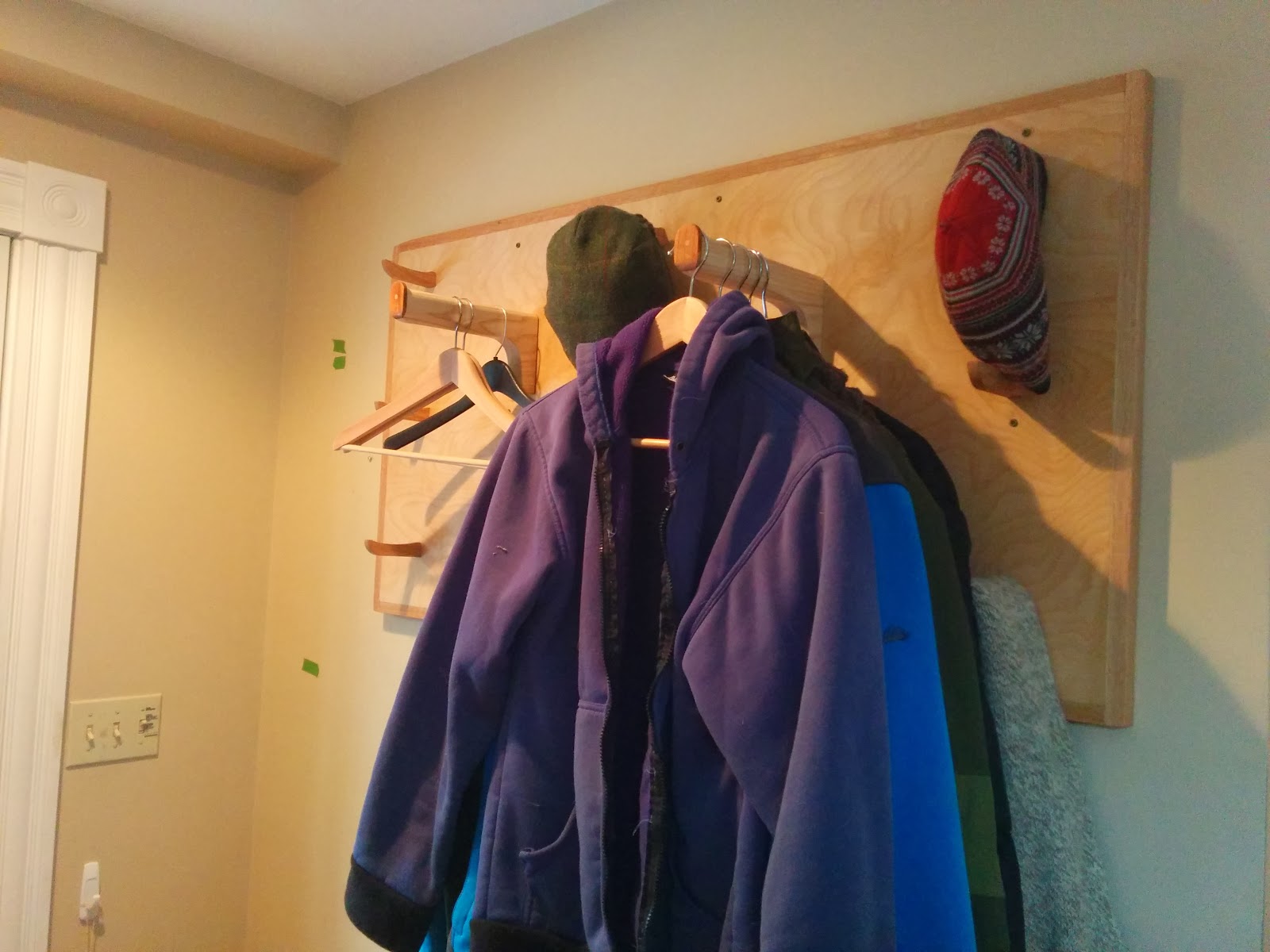
Coat rack that actually fit in my house. I used this opportunity to teach some helpful friends to make fox-wedged mortise-and-tenon joints by hand. Those pegs are not coming out any time soon.

Friday, April 4, 2014

Splitting oak, day 2

Last night I showed up with another friend to help, and some additonal tools. We got it down to a science, finally. Warning, one of these photos is intentionally misleading.


Splitting something this thick is quite different that splitting firewood, I think mostly because it cannot deflect away from the wedge nearly as much.

Here's the recipe that worked for us:
1. score the line with a machete, lightly tapped with a dead-blow mallet
2. reinforce the line with several passes of axe & sledge, until about 2 inches deep
3. at 1/3rd and 2/3rds of the way across, bury the axe, pull out, and get a wedge started in its place before the wood swells and closes the gap. Use the wedges with powder coating right up to the edge so they grip instead of bouncing out.

4. Advance the wedges a couple inches, until the whole line starts to get visibly wider
5. add more wedges.
6. beat the wedges until the log is mostly split
7. lever with the froe down low to save a bunch of wedge work
8. reach in with a machete and snip a few fibers bridging the gap.
9. drink some beer.
We figured out that these eights weigh a little over 200 lbs. each.
YMMV, of course.
There was another more general lesson I got out of this too. It's a corrollary to that old one about the right tool for the job: It's not always obvious which tool is the most efficient. The best splitting wedges were the ones I bought at the last minute and I thought would be terrible. Certain whacking implements were useless at certain moments, and perfect at others. A few times, the log just laughed at us while bouncing a wedge out after we tried hitting it with steel. Other times it was a dead-blow mallet that induced wooden laughter. Having a couple to choose from was absolutely necessary.
Thanks to Seth for the rare opportunity, and to both him and Matt for the extensive help. And to Mikki for delicious food!


Thursday, April 3, 2014

Splitting oak, day 1

My cousin offered me this oak log from a tree-removal the other day. I got over there in a hurry and found this chunk at about 40" in diameter. It took me about an hour and a half to split it the first time, taking advantage of some checks that had already formed. I'm going back to expend more effort on it tonight.
I'm really looking forward to having radially split oak boards, but this is a learning experience I never bargained for. I broke my club/beetle, my froe, and severely degraded one hatchet handle in the process. leap-frogging a pair of splitting wedges is a nice theory, but I wish I had 10 sharp ones. (the 2 I used yesterday are sharp for today).
Enjoy the pictures.
The first step is scoring a line. I used a machete (not pictured).


This froe was still useful after it broke. I'm pretty sure breaking it was my own fault. I should not have hit it with steel after the wooden maul broke.
Finally it's in two. For bonus points, count the broken tools.
My cousin and I struggled with one half for a while. It was harder since there were no existing checks to take advantage of.

Wooden spoon, first attempt


This is my first [completed] attempt at a wooden spoon. It was more time consuming than I expected, but all in all, a pretty fun, easy project. And a nice way to make use of reaction wood. This one is from a forked maple branch.